Insights

Guides and advice on treating water and wastewater, from the people who build the plants.

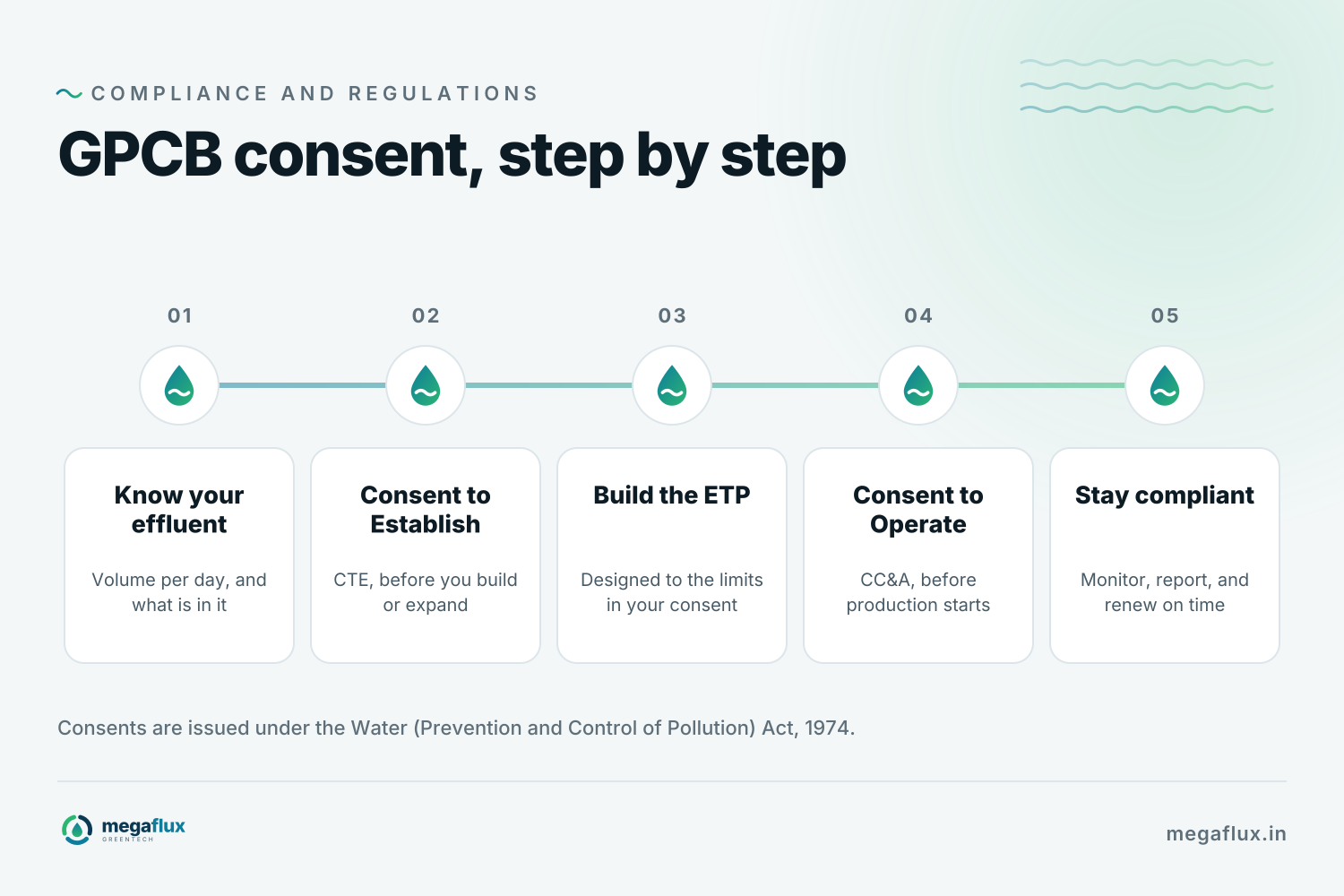
Five steps to GPCB consent: know your effluent, get Consent to Establish, build the ETP, get the CC&A to operate, then stay compliant by monitoring, reporting and renewing on time.

Do you need an ETP? GPCB consent in Gujarat, explained

If your unit discharges industrial wastewater, your consent from the Gujarat Pollution Control Board will set limits it must meet. What the consents are, and where an effluent treatment plant fits.
Reverse osmosis

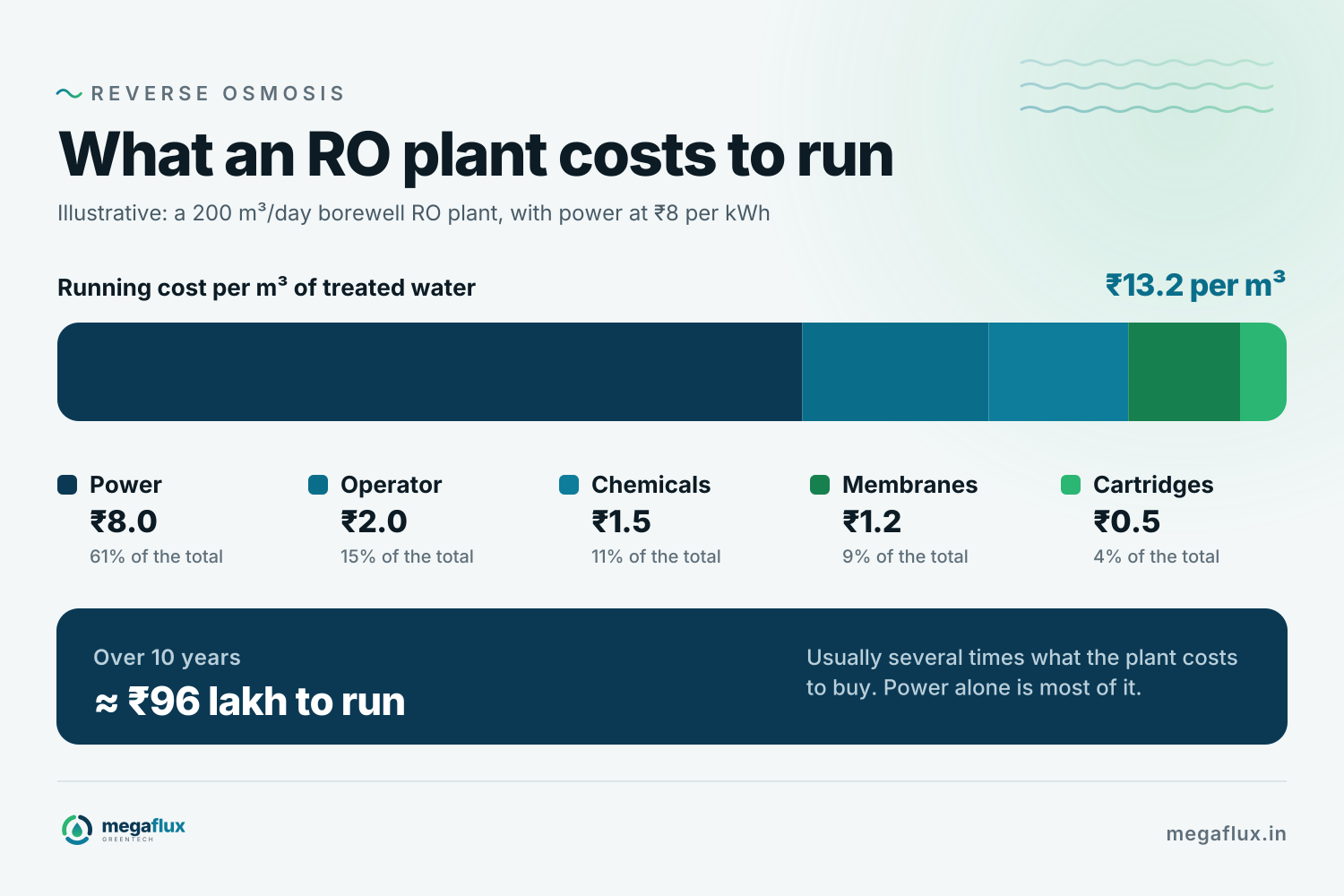
A bar showing the running cost of an illustrative 200 m³ per day RO plant: about ₹13.2 per m³, of which power is ₹8.0, operator ₹2.0, chemicals ₹1.5, membranes ₹1.2 and cartridges ₹0.5. Over 10 years, about ₹96 lakh.

How much does an industrial RO plant cost to run?

The purchase price is the smaller number. Power, chemicals, membranes and labour decide what an RO plant really costs, and how to compare quotes on them.

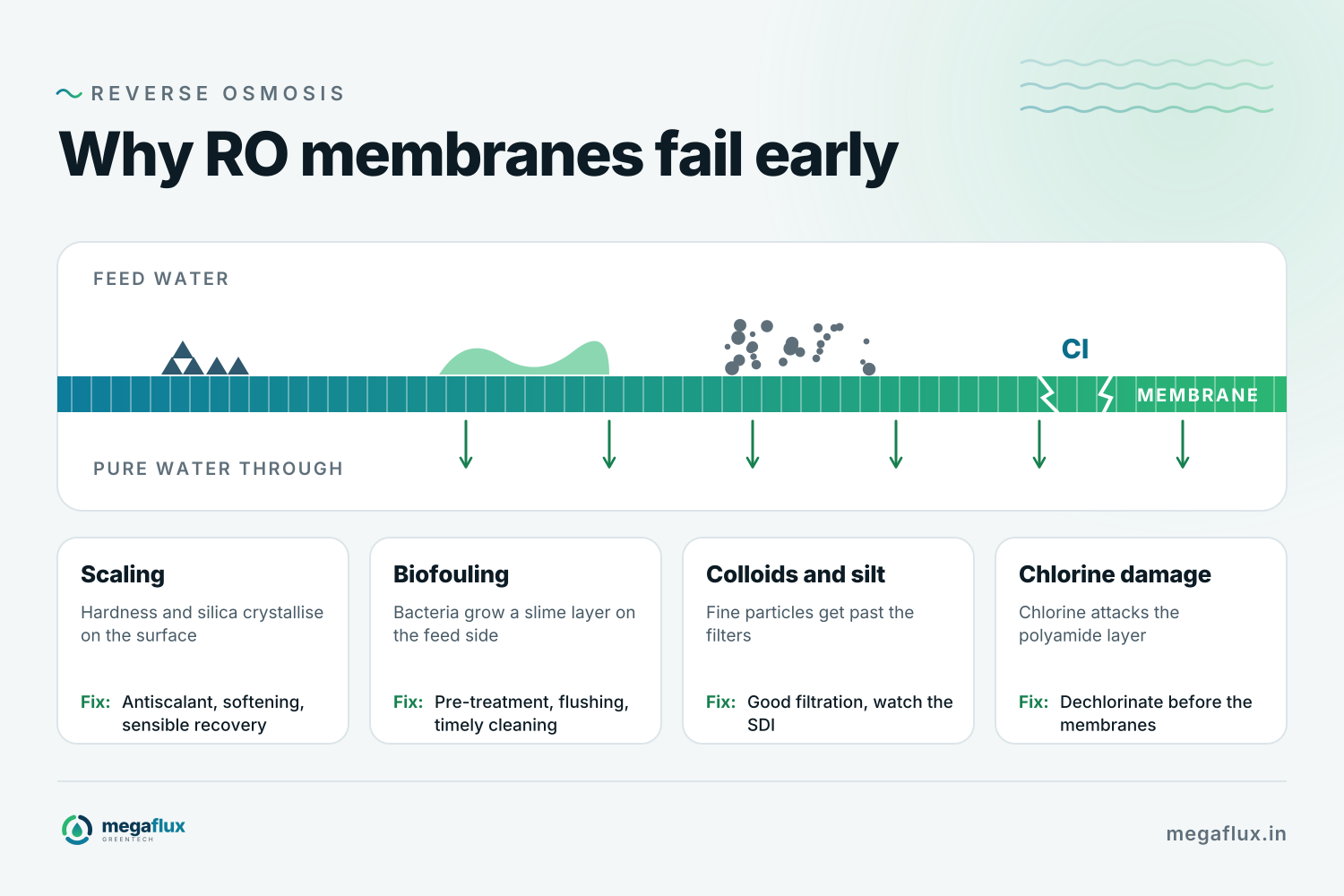
A cross-section of an RO membrane showing four threats on the feed side: scale crystals, a biofilm, colloids and silt, and chlorine damage, each with its fix.

Why RO membranes fail early, and how to make them last

RO membranes should last years. When they don't, the cause is almost always scaling, fouling or chlorine, and the warning signs show up in the plant's readings long before the membranes die.

Desalination

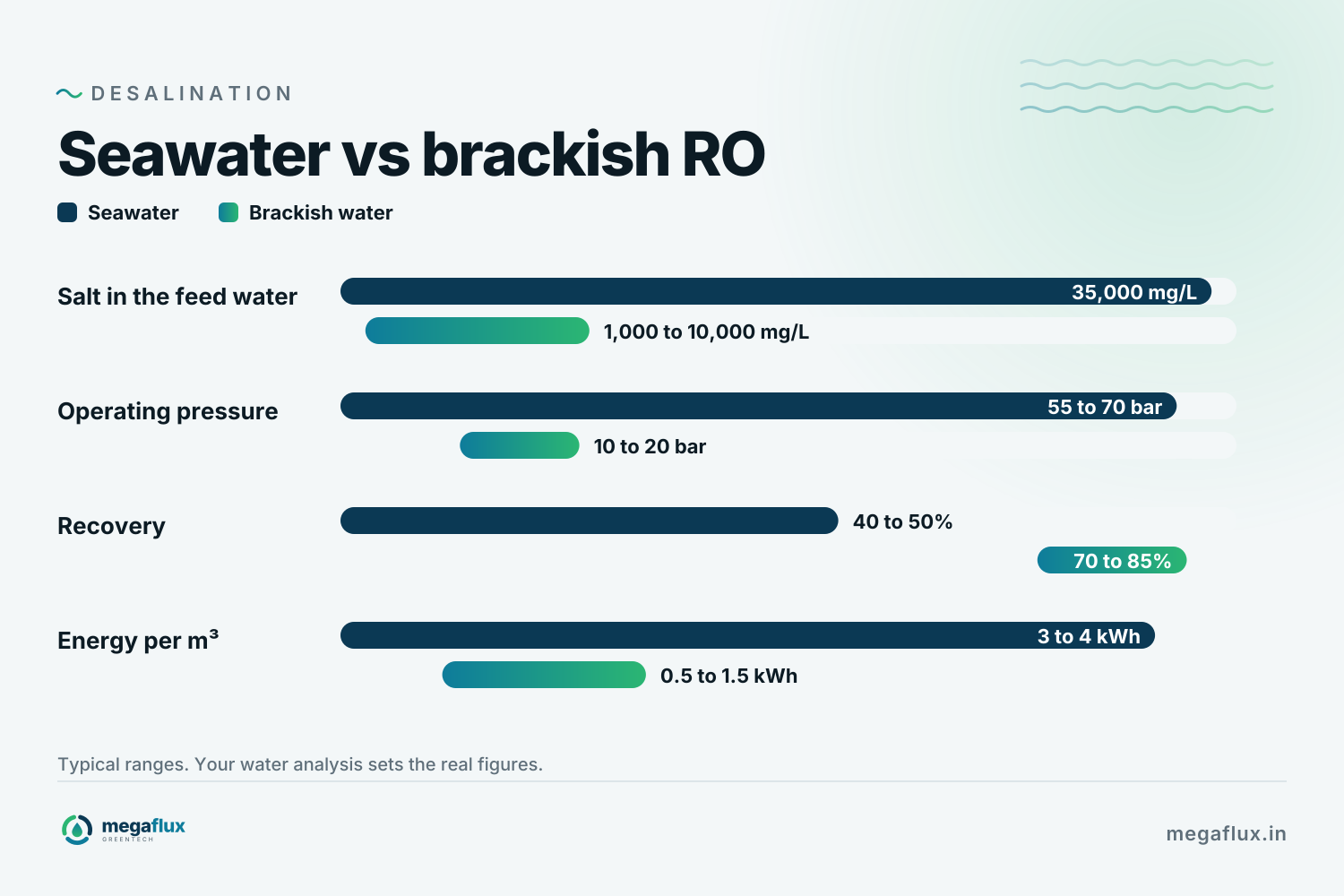
Seawater versus brackish water RO: feed salt 35,000 against 1,000 to 10,000 mg/L, operating pressure 55 to 70 against 10 to 20 bar, recovery 40 to 50% against 70 to 85%, and energy 3 to 4 against 0.5 to 1.5 kWh per m³.

Seawater vs brackish water RO: what changes in the plant

Both use reverse osmosis, but a seawater plant runs at several times the pressure, recovers less water and uses more energy. What changes, and why it matters for your site.

Sewage treatment

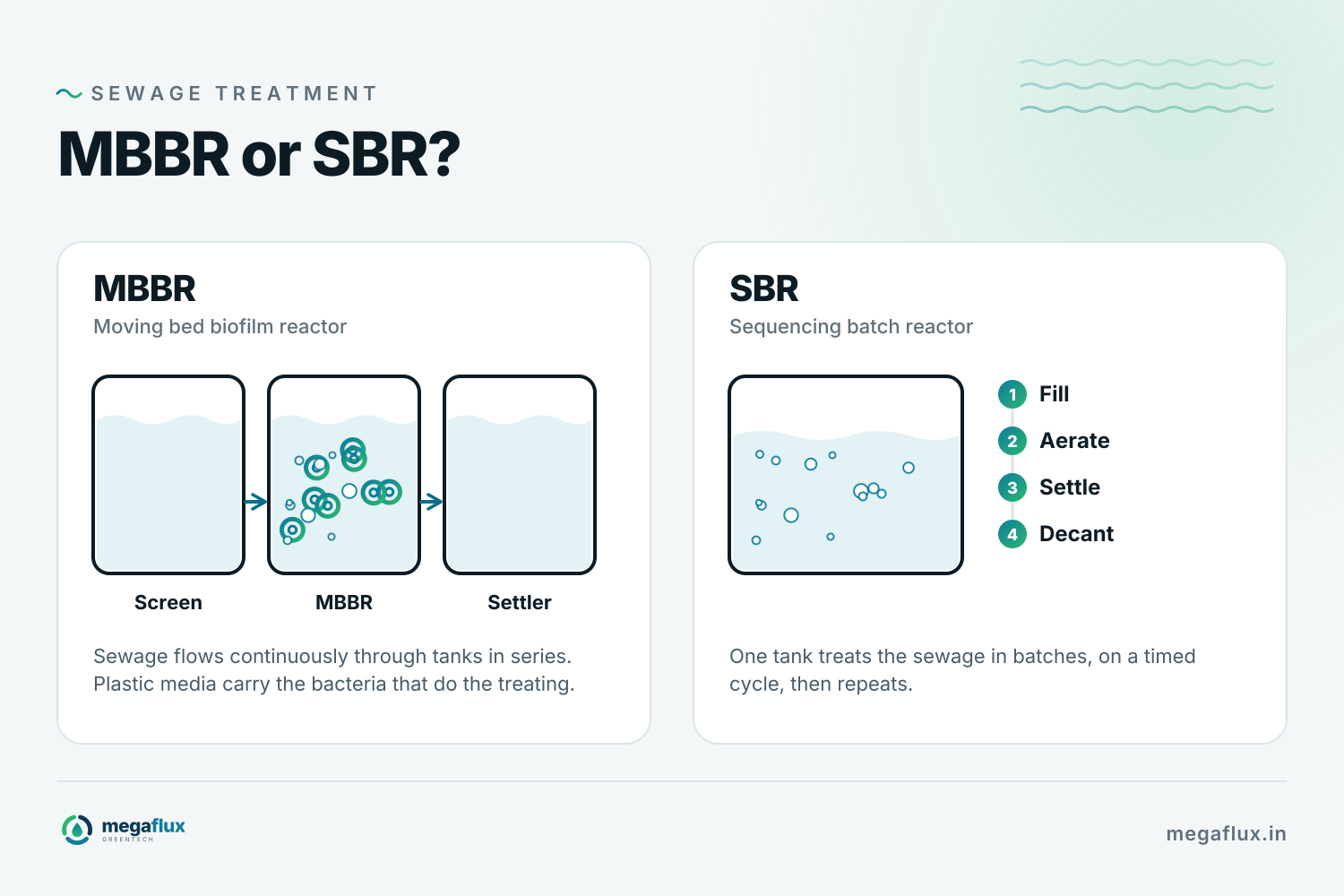
Two sewage treatment designs side by side. MBBR: sewage flows continuously through a screen, an MBBR tank with plastic media, and a settler. SBR: one tank treats sewage in batches on a cycle of fill, aerate, settle and decant.

STP for housing societies: MBBR vs SBR

The two most common technologies for a society's sewage treatment plant, how each works, and how to choose between them for your building.

Water softening

Compliance and regulations

Five steps to GPCB consent: know your effluent, get Consent to Establish, build the ETP, get the CC&A to operate, then stay compliant by monitoring, reporting and renewing on time.

Do you need an ETP? GPCB consent in Gujarat, explained

If your unit discharges industrial wastewater, your consent from the Gujarat Pollution Control Board will set limits it must meet. What the consents are, and where an effluent treatment plant fits.